From Ancient Egypt to Present-Day Boston: The Many Journeys of 18th Dynasty Art

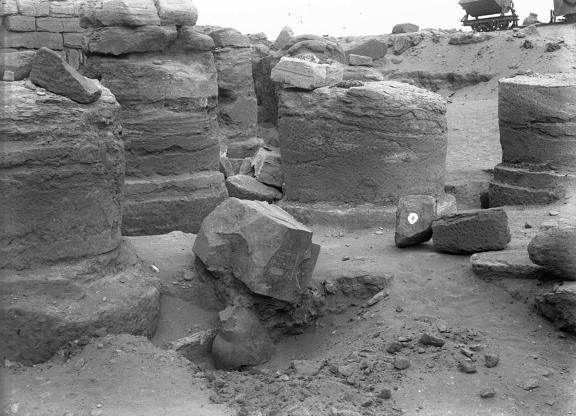
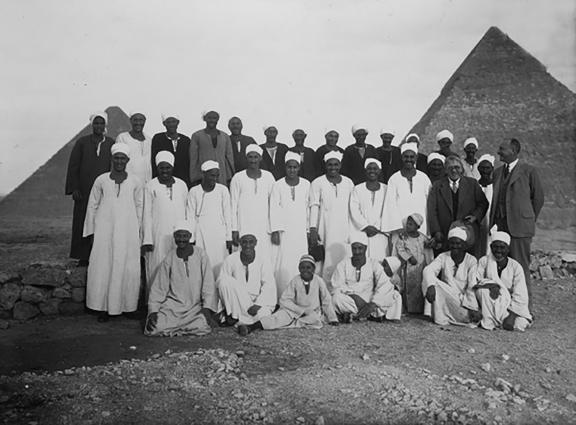
Mohammedani Ibrahim Ibrahim (Expedition photographer), Harvard University–Boston Museum of Fine Arts Expedition in Gebel Barkal, Sudan: Expedition director Georger Andrew Reisner entertaining Governor William Jackson Pasha and party in Temple B700, March 17, 1916.
Mohammedani Ibrahim Ibrahim (Expedition photographer), Harvard University–Boston Museum of Fine Arts Expedition in Gebel Barkal, Sudan: Expedition director Georger Andrew Reisner entertaining Governor William Jackson Pasha and party in Temple B700, March 17, 1916.
The art of the pharaohs is awe inspiring, and the exhibition “Maverick Kings” highlights the impressive achievements of Egypt’s “golden age” (18th Dynasty, 1550–1292 BCE) primarily through the MFA’s sizable collection. The Museum acquired its first Egyptian objects in 1872; today it boasts more than 60,000 such items—one of the largest collections in the world. But Boston is thousands of miles from Egypt. How did these objects make their way to the MFA? And why are their life stories—also known as their provenance, or history of ownership—important?
The provenance of any work of art helps us to appreciate it fully: knowing an object’s history allows a better understanding of its condition, function, authorship, and subject matter, as well as its place in the history of taste and collecting. Beyond that, the provenance of ancient and archeological materials may be intertwined with important legal and ethical issues.
Archeologists study the past by analyzing the physical remains of earlier cultures: architectural fragments, tools, vessels, and sculpted effigies, to name just a few. When archeologists record where and how they found an artifact, that data helps us to better understand the historical record. The illicit excavation of archeological materials, on the other hand, destroys the historical record. Looters hunt for visually appealing objects they can sell. In their search, they disturb burial sites, discarding utilitarian objects and human remains, and they keep no record of where or how they made their discoveries. Looted antiquities go onto the art trade without any information about their archeological context. Their market prices incentivize additional site looting, and the cycle continues.
From a scholarly and ethical perspective, then, any antiquity in circulation should—at least in an ideal world—have a documented findspot, or place of discovery. Fortunately, much of the MFA’s Egyptian collection is made up of scientifically excavated materials, so we know exactly when and where they were found.
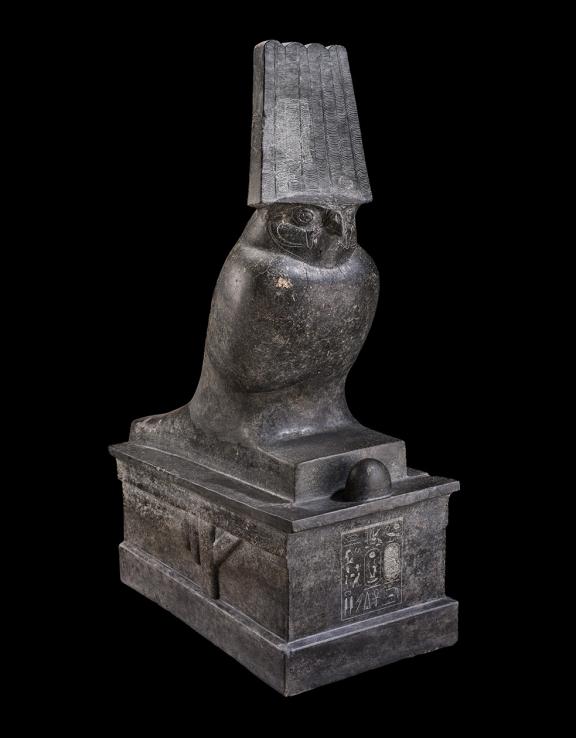
Between 1905 and 1945, MFA curator George Reisner (1867–1942) led the Harvard University–Boston Museum of Fine Arts Expedition. Under his leadership, expedition teams conducted archeological digs at 23 different sites in Egypt and Sudan. The Egyptian and Sudanese governments kept a portion of the discoveries, allocating other portions to the MFA through a process called partage, or division of finds. It was in this way that many of the Museum’s masterworks came into the collection, like the statue of Horus as a falcon from Gebel Barkal.
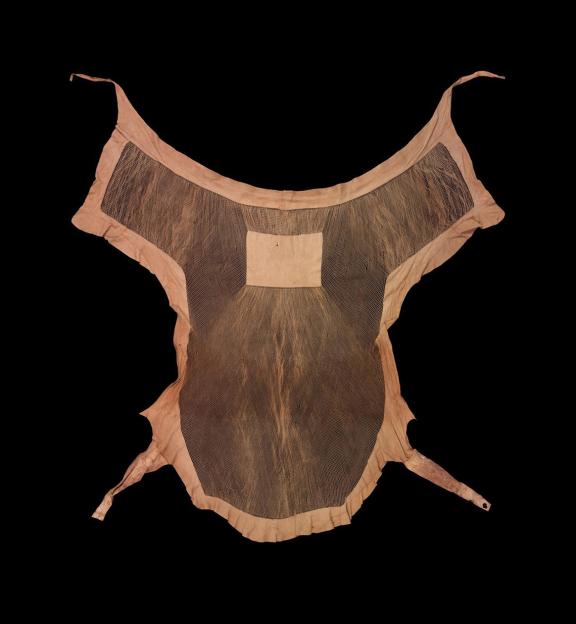
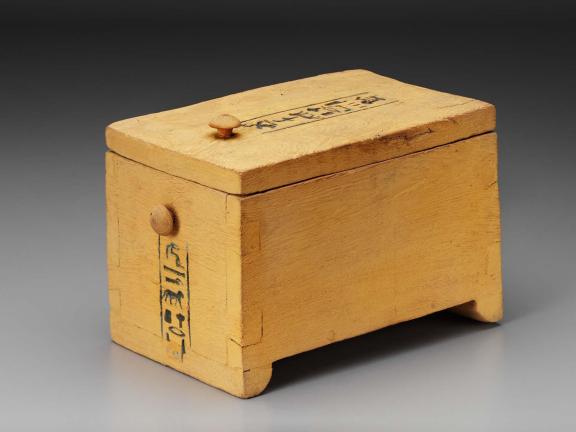
Other objects in “Maverick Kings” were excavated not by Reisner, but by the London-based Egypt Exploration Fund (later the Egypt Exploration Society). Its excavation work was subsidized by paid subscriptions. In exchange for providing funding, subscribers like the MFA received a share of the artifacts that were found. This is how the impressive seated statue of Ramesses II came into the collection. Still other objects were excavated under the direction of Howard Carter (1874–1939), best remembered today for unearthing King Tut’s tomb. Carter worked in Egypt with the financial sponsorship of Newport-based businessman Theodore M. Davis (1837–1915), who received a share of the finds and made donations from his collection to the Museum. In 1902, Carter and his team found an extraordinarily rare loin cloth above the tomb of a man named Maiherpra in the Valley of the Kings. This garment, made of tanned goatskin that has been painstakingly cut into mesh, is included in the exhibition alongside the wooden box that held it for millennia.
Not every work of art in “Maverick Kings” can be traced to a specific archeological dig. Beginning in the 19th century, private collectors traveled to Egypt and purchased antiquities from local sellers. Some of the earliest works of Egyptian art to enter the MFA’s collection were acquired by Bostonian John Lowell Jr. (1799–1836). Lowell was grieving the loss of his wife and two children when he set out for Europe, the Middle East, and Africa in 1832. In 1835, he arrived in Thebes in failing health. As orator Edward Everett recounted years later:
While detained by sickness at Thebes, he employed his attendants in making a collection of antiquities; and he succeeded in possessing himself of as large an amount and variety of these objects as have, probably, at any time been acquired by an American.1
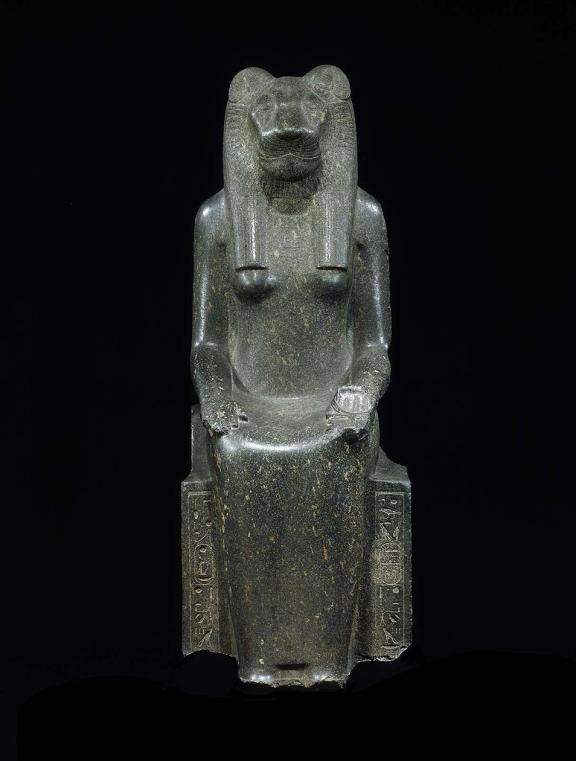
This “amount and variety” included what would become the MFA’s first monumental Egyptian sculptures, like the seated Sekhmet from the Temple of Mut. Lowell put his new acquisitions onto a ship bound for Boston, where they arrived later that year. Sadly, he succumbed to his illnesses before he could return home, and he died in India in 1836. The Lowell family kept his antiquities in the garden of their family estate, Bromley Vale (now the site of the Mildred C. Hailey Apartments in Jamaica Plain) for nearly 40 years. In 1875 the family donated a portion of the antiquities to the MFA.
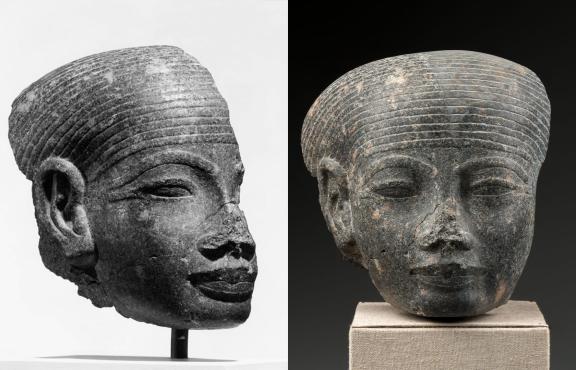
When Mary Welles (1830–1884) of Aurora, New York, went to Karnak around 1860 with her husband, she probably did not imagine that the sculpture she purchased there, a fragmentary head of a deity, would one day be made whole again. Welles sold objects from her collection to the Peabody Museum at Harvard University, and her sculpture came to the MFA through a 1944 exchange with Harvard. Serendipity struck in 1976, when the MFA learned that the other half of the head had been offered for sale in New York. The Museum purchased it in 1979 and had the two pieces conserved. They are now displayed together as a complete sculpture.
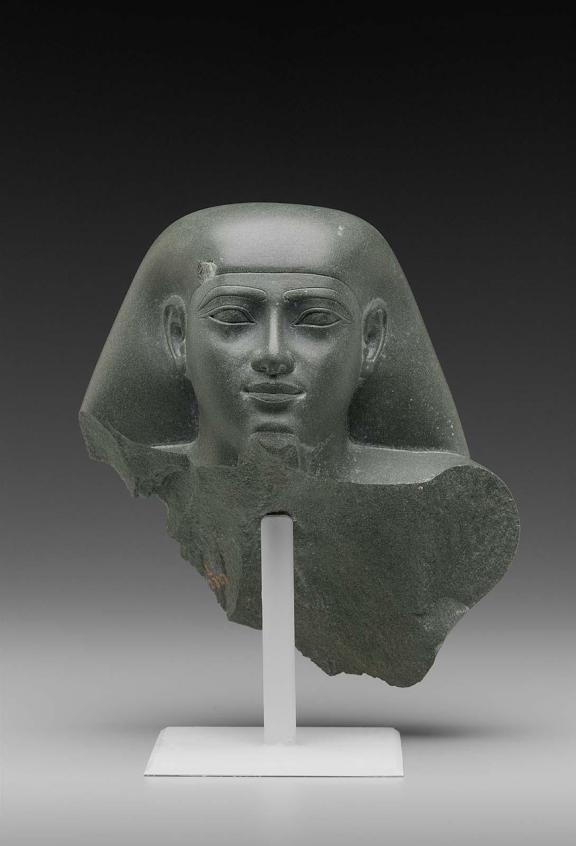
The MFA has rounded out its collection of Egyptian antiquities through purchases like this. In the early years of the 20th century, curator Albert Lythgoe (1868–1934) bought objects such as the head of Ankhkhonsu, a fragment of a larger statue, from Luxor-based dealer Mohamed Mohassib. As with the sculpture Welles owned, the other half of this object has since been identified; the body was excavated in 1905 and is today at the Egyptian Museum in Cairo. Lythgoe’s successors at the MFA have continued to work with antiquities dealers, though the ethics of collecting have changed significantly over the years. For most of the 20th century, buyers did not ask many questions about provenance, and art and antiquities dealers were reluctant to disclose their sources. Details that were not recorded became lost, and in many cases were forgotten entirely. As a result, the objects the MFA has purchased on the market, especially in the mid- to late-20th century, do not often have extensive provenance.
This brings us back to the work of archeologists. If we do not know when and where an archeological object was found, or who has owned it over the course of its life, then there is no way for us to know whether it was recently looted. Buying antiquities that lack provenance fuels an opaque market, one that can easily harbor illicitly excavated materials and incentivize future looting.
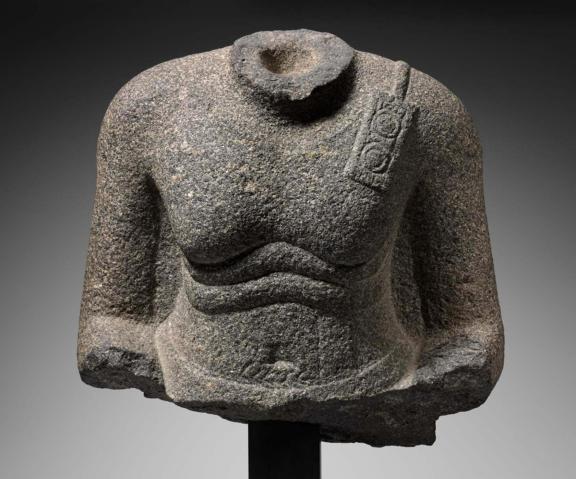
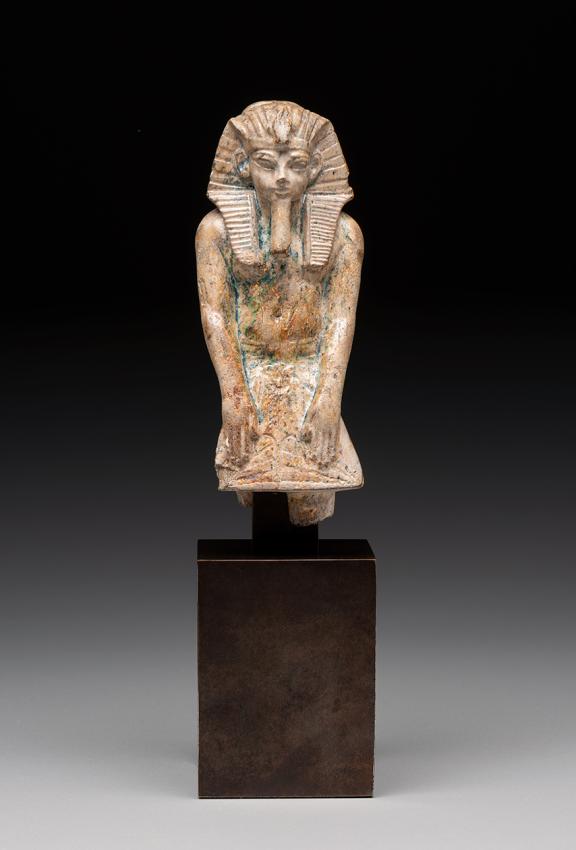
The MFA does not want to contribute to the destruction of archeological sites in this way. Over the last 20 years, the Museum has become increasingly conscious of the role it plays in helping to shape the antiquities market. Today the MFA will not acquire any ancient or archeological materials—by purchase, gift, or bequest—without conducting extensive research about its ownership history first. Normally the Museum will turn down an antiquity if it has not been out of the ground and outside of its country of origin since at least 1970 (the year of the UNESCO Convention on the Means of Prohibiting and Preventing the Illicit Import, Export, and Transfer of Ownership of Cultural Property). By adhering to this threshold date, the Museum can ensure that it is not providing any direct, material incentive to the illicit trade. “Maverick Kings” features several objects acquired recently, such as the torso of a scribe and statuette of Amenhotep III, whose ownership histories reflect these new, more rigorous practices.
Colonialism and Provenance Research
Many of the objects in the exhibition were excavated and exported from Egypt and Sudan while the areas were under British colonial rule. Egypt was occupied from 1882 until 1936, and Sudan from 1899 until 1956. It was, therefore, colonial governments that granted permission for these objects to be excavated and exported, and today we can recognize the power imbalances that are inherent in such a situation.
When an occupying force is in place, those who are colonized have a diminished ability to regulate the trade in their cultural property. Many colonial governments in Africa and Asia allowed artwork to be taken by force or without permission. But not everything that left its place of origin under colonialism was stolen. Cultural property moved under a broad spectrum of circumstances. These ranged from theft to the collecting of abandoned or discarded property to archeological excavations—like those the MFA participated in—to free-will sales. Some communities under colonial rule cultivated a lively trade in local artifacts and benefitted materially from European visitors.
The only way to know how for sure how an object left its place of origin is through provenance research. In 2021 the MFA launched a colonial-era provenance research project to identify works of art in the collection that were subject to theft, looting, or coercive transfer under periods of occupation rule. In some cases, this research has resulted in restitution, as for example in 2025, when the MFA returned two pillaged sculptures to the Oba of Benin (in present-day Nigeria). But restitution is not the only goal. The Museum aims, first, to understand how works of art left their place of origin and where they have traveled; second, to be transparent with the results of its research; and third, to invite conversations with source countries and communities about the disposition and care of these artifacts. These goals are consistent with the MFA’s provenance research efforts more broadly, which have been ongoing since 2000.
Each object in the exhibition “Maverick Kings” has undergone a careful review. You can learn more about the provenance of any work of art in the MFA’s collection using the Museum’s online collections database.