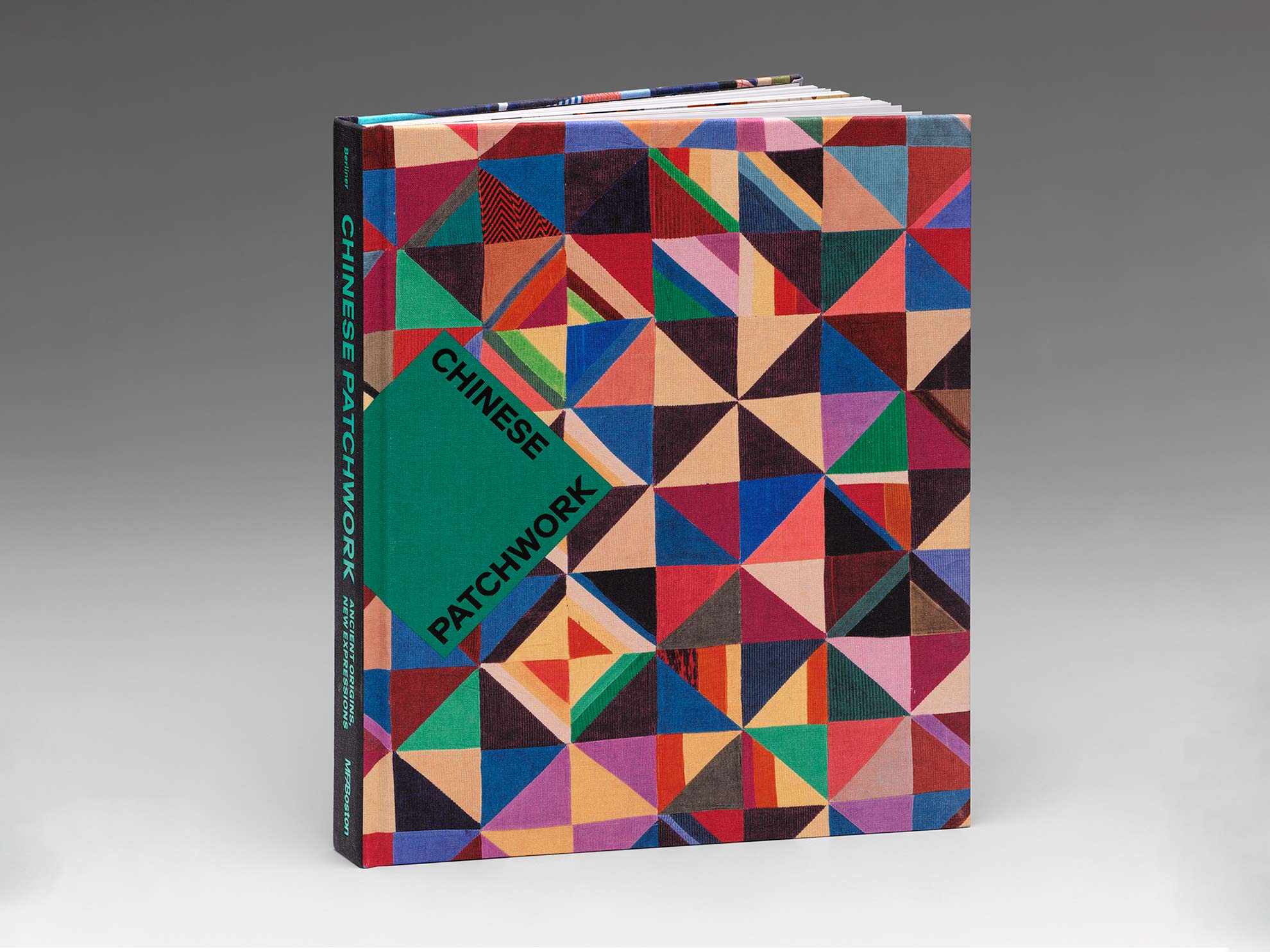
Patchwork Textiles

Wang Yingying, patchwork textiles: bed cover (detail), 1950s. Pieced cloth sewing and binding. Joel Alvord and Lisa Schmid Alvord Fund. Reproduced with permission.
Wang Yingying, patchwork textiles: bed cover (detail), 1950s. Pieced cloth sewing and binding. Joel Alvord and Lisa Schmid Alvord Fund. Reproduced with permission.
I grew up with parents immersed in the contemporary art of their era. They covered the walls of our home from floor to ceiling with abstract art. Robert Motherwell, Josef Albers, and Piet Mondrian were my childhood heroes. Even today, my eyes and soul are easily moved by abstract shapes. That is why, as an adult, in a Buddhist cave temple in Northwestern China, when I spied out of the corner of my eye a patchwork textile exquisitely composed of a range of irregular shapes and colors, I became giddy with whatever it is that art can do to our hearts.
I eventually learned that these patchwork textiles—made for the home or as donations to temples, but never for sale—are a living tradition in certain regions of China. They descend from Buddhist and Daoist sartorial customs, though in the countryside they are also a practical necessity, with fabric scarce and frugality considered virtuous. The resulting beauty of these textiles also derives from a comfort with improvisation using available materials, and the fine sensibilities of individuals who express themselves through visual abstraction.
Over time, as I have researched patchwork textiles and sought them out across China, I have met with many women who make them. (Women are traditionally responsible for sewing in the household. Though many men are tailors, I have never met a man who made patchwork textiles for his own home.) During my conversations with these women, there have been crystal clear moments when I knew I was speaking not with a housewife merely following an age-old pattern, but with an artist seriously focused on composing abstract forms and colors.
One sunny afternoon in June, in a mountain village in eastern Shanxi Province, I spoke with Chen Yingping in the courtyard of her home. She had pulled a few of her works out from her cabinets and hung them on a clothesline. Looking at one, I noticed a specific rhombus in the field of rhombuses that must have been a scrap from manufactured children’s clothing.
“Why did you put that piece there?” I asked Chen.
She laughed at my question and with no hesitation definitively replied, “Because it looks good.”
Her words were the answer to my larger question: Are these women making aesthetic decisions just as Rothko chose his colors or Motherwell his shapes?
Later I watched as Chen pieced together a group of randomly shaped fabric scraps, remnants from old tired clothes. Sitting on a low stool at a table in the courtyard, she first carefully selected a group of fabrics from the bundle of scraps she kept. After snipping and arranging the group, she carried them to her foot-powered pedal sewing machine, which sat in the sunlit doorway of her bedroom. A young kitten watched Chen’s feet go up and down as she began sewing. Chen picked up a fabric, trimmed and reshaped it, and attached it to another, improvising as she went along. Though she never planned her designs, her placement and shaping were deliberate.
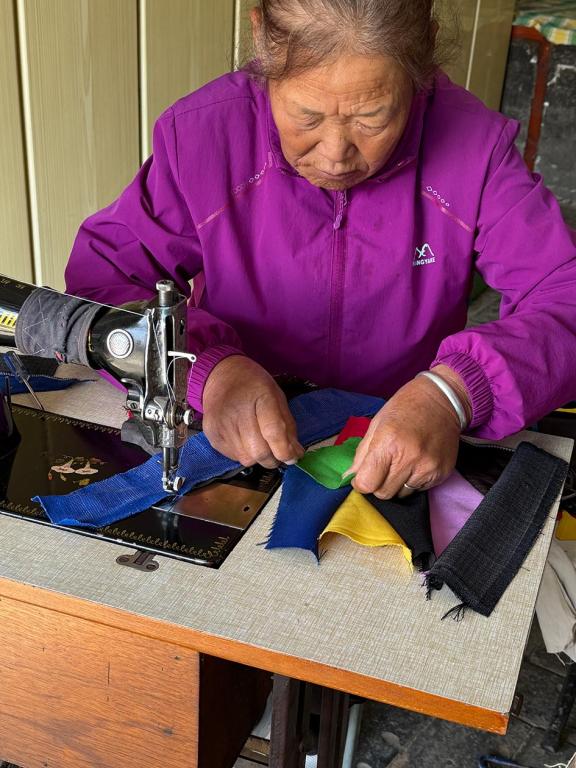
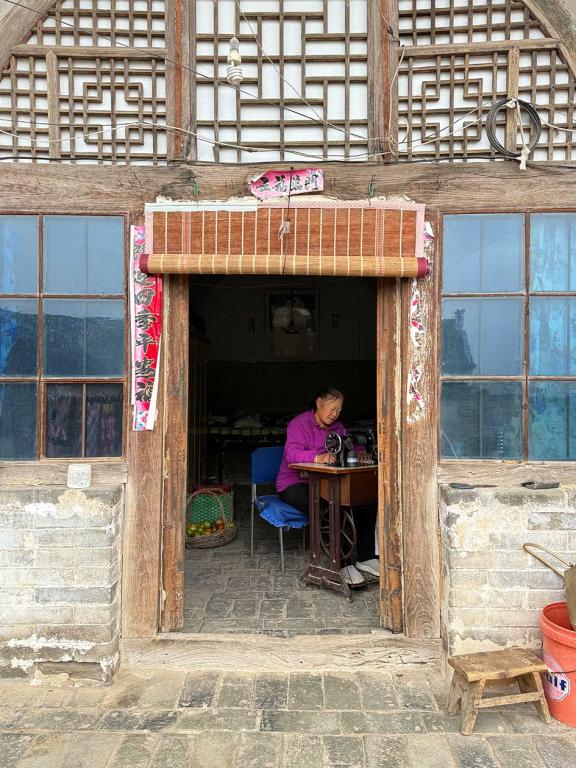
Riding down a road in Shaanxi Province, I noticed a patchwork curtain hung in every doorway of a partially finished two-story brick house. I pulled over and hollered outside the locked gate until a woman came out and welcomed me in. Her sewing machine sat in the sunlight just beyond the doorway. Nearby, her grandson sat on a bed; he had cerebral palsy and, she explained, she was responsible for his care. With nothing else to do all day she made patchworks, some of which she began to empty from a cabinet. As she opened one up, I commented on its dynamic and special composition.
“It’s just okay,” she responded. “There’s too much white.”
Again, I heard the commentary of a maker deeply sensitive to the subtleties of color and shape.
Among the literati of China’s Ming (1368–1644) and Qing (1644–1912) dynasties, so-called “amateur” artists garnered more respect than professionals. Conceptually (though not necessarily in reality), these nonprofessionals painted only for their own edification and expression, gifting—but never selling—their works. They looked down on professionals, who had to tailor their works to the tastes of the market or clients.
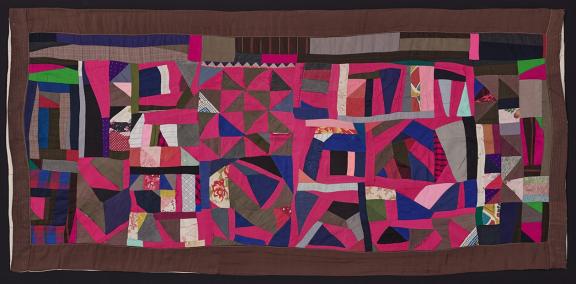
There is indeed a purity of purpose among those engaged in creating without striving to show their work in galleries or even sell to tourists. In the art world today, terms for makers who do not work within the established canon abound: folk artist, outsider, self-taught, visionary. I would rather not label these artists as different from any other; I have the same emotional reaction to the best of these patchwork textiles as I do when I look at a work by Sol Lewitt.
When time and weather have done their damage to these door curtains or bedcovers, the makers often give them new, less-visible functions. They become a wall in a privy, a cover for a chicken coop, or a dust cover. Or they are burned with garbage. They were art for only a moment. But it was a really great moment.