Maverick Kings

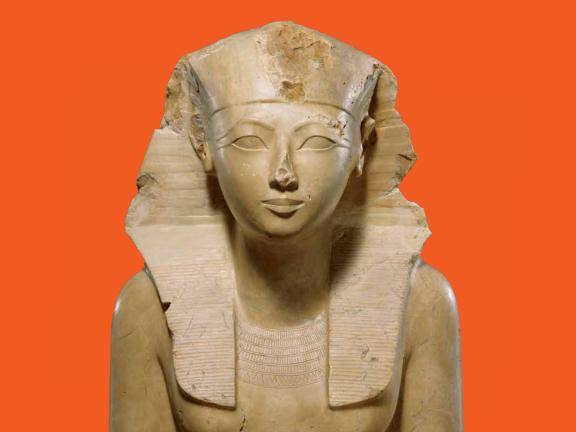
Unknown artist, seated statue of Hatshepsut (detail), Egyptian, New Kingdom, Dynasty 18, joint reign of Hatshepsut and Thutmose III, about 1479–1458 BCE. Indurated limestone, paint. The Metropolitan Museum of Art, New York; Rogers Fund, 1929. Image copyright © The Metropolitan Museum of Art. Image source: Art Resource, NY.

Unknown artist, relief of Amenhotep III and Sekhmet, Egyptian, New Kingdom, Dynasty 18, reign of Amenhotep III, 1390–1352 BCE. Quartzite. Gift of British School of Archaeology in Egypt.

Unknown artist, sculptor’s trial piece with face of King Akhenaten, Egyptian, New Kingdom, Dynasty 18, reign of Akhenaten, 1349–1336 BCE. Limestone. Egypt Exploration Society by subscription.
Unknown artist, seated statue of Hatshepsut (detail), Egyptian, New Kingdom, Dynasty 18, joint reign of Hatshepsut and Thutmose III, about 1479–1458 BCE. Indurated limestone, paint. The Metropolitan Museum of Art, New York; Rogers Fund, 1929. Image copyright © The Metropolitan Museum of Art. Image source: Art Resource, NY.
Unknown artist, relief of Amenhotep III and Sekhmet, Egyptian, New Kingdom, Dynasty 18, reign of Amenhotep III, 1390–1352 BCE. Quartzite. Gift of British School of Archaeology in Egypt.
Unknown artist, sculptor’s trial piece with face of King Akhenaten, Egyptian, New Kingdom, Dynasty 18, reign of Akhenaten, 1349–1336 BCE. Limestone. Egypt Exploration Society by subscription.
Spanning 1550 to 1292 BCE, the 18th Dynasty, known as ancient Egypt’s “golden age,” was marked by great societal and artistic change. Initiating these developments, Egypt’s mighty pharaohs patronized artists, architects, and craftspeople, who in turn produced distinctive portraits, impressive buildings, and art with a recognizable style. This exhibition focuses on three celebrated rulers of the 18th Dynasty: Hatshepsut, Amenhotep III, and Akhenaten. All members of the same family, each was a maverick who understood the power of images and used them effectively to advance their agendas during their long reigns.
One of ancient Egypt’s few female pharaohs, Hatshepsut (reigned about 1473–1458 BCE) founded the 18th-Dynasty artistic style. She built impressive temples furnished with statues and obelisks bearing her likeness as king, yet she received no credit for her achievements. Years after her death, for reasons still not clear, Hatshepsut’s images were smashed and her name was erased from history, only to be rediscovered by modern Egyptologists. Amenhotep III (reigned about 1390–1352 BCE) was one of Egypt’s most successful rulers; sculpture portraits characteristic of his reign have radiant faces suffused with satisfaction and well-being. Akhenaten (reigned about 1352–1336 BCE), son of Amenhotep III, sought to change Egypt’s religion to worship of a single deity, the Aten, represented by the disk of the sun. Artists depicted him and his queen, Nefertiti, with distinctive body proportions: narrow shoulders, slender high waists, faces with long chins, and elongated skulls.
Drawing primarily from the MFA’s extensive collection of ancient Egyptian art, one of the largest and most important in the world, “Maverick Kings” explores the lives and legacies of these dynamic monarchs through their art and own words. Visitors can see major monuments to Hatshepsut, including the only royal sarcophagus from the 18th Dynasty outside of Egypt; large statues of deities in animal form, a style characteristic of Amenhotep III’s reign, such as a nearly six-foot-tall statue of a falcon; and a sculpted portrait of Akhenaten’s son, Tutankhamen (reigned about 1332–1323 BCE), who restored the cults of the old gods. Together these objects reveal how, just as we fashion public personas for our own ends today, these three pharaohs created and used their own images to achieve and retain political power. The exhibition also includes objects on loan from the Metropolitan Museum of Art in New York, the Egyptian Museum in Berlin, the Cleveland Museum of Art, and the Kimbell Art Museum in Fort Worth, Texas. It ends with contemporary art by Awol Erizku and others that exemplifies the perennial influence and appeal of ancient Egyptian imagery.
See It with a Ticket
Everyone needs a timed-entry ticket to see the exhibition, including members—reserve yours to guarantee entry. Don’t forget, exhibition tickets include general admission to the Museum!
Tickets go on sale to the public August 4; to members July 29.
In addition to getting early ticket access, members are invited to a special preview from September 2 through 5, before the exhibition opens to the public. Join today!
- Ann and Graham Gund Gallery (Gallery LG31)
Featured Artwork


Unknown artist, seated statue of Hatshepsut (detail), Egyptian, New Kingdom, Dynasty 18, joint reign of Hatshepsut and Thutmose III, about 1479–1458 BCE
Indurated limestone, paint. The Metropolitan Museum of Art, New York; Rogers Fund, 1929. Image copyright © The Metropolitan Museum of Art. Image source: Art Resource, NY.

Unknown artist, relief of Amenhotep III and Sekhmet, Egyptian, New Kingdom, Dynasty 18, reign of Amenhotep III, 1390–1352 BCE
Quartzite. Gift of British School of Archaeology in Egypt.

Unknown artist, sculptor’s trial piece with face of King Akhenaten, Egyptian, New Kingdom, Dynasty 18, reign of Akhenaten, 1349–1336 BCE
Limestone. Egypt Exploration Society by subscription.

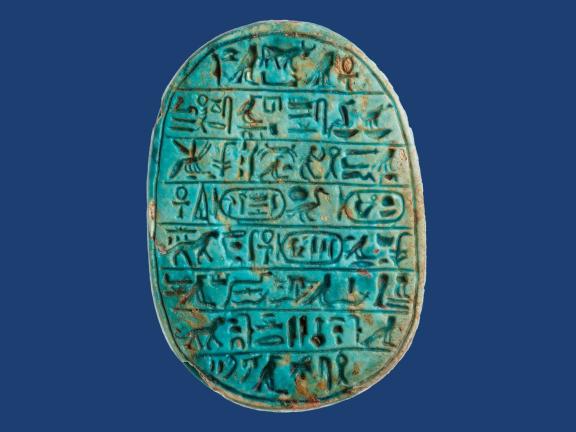
Unknown artist, lion hunt scarab of Amenhotep III Egyptian, New Kingdom, Dynasty 18, reign of Amenhotep III, 1390–1353 BCE
Glazed steatite. Emily Esther Sears Fund.

Unknown artist, statue of a falcon (Horus of Nekhen), Egyptian, New Kingdom, Dynasty 18, reign of Amenhotep III, 1390–1352 BCE
Granodiorite. Harvard University–Boston Museum of Fine Arts Expedition.

Unknown artist, kneeling statue of Senemut, chief steward of Queen Hatshepsut, Egyptian, New Kingdom, Dynasty 18, reign of Hatshepsut, 1473–1458 BCE
Graywacke. Kimbell Art Museum, Fort Worth, Texas.

Unknown artist, fragment of a head of a deity, Egyptian, New Kingdom, Dynasty 18, reign of Amenhotep III, 1390–1353 BCE
Granodiorite. Egyptian Special Purchase Fund.

Unknown artist, fragment of a boundary stele with Nefertiti and two princesses, Egyptian, Dynasty 18, reign of Akhenaten, 1349–1336 BCE
Limestone. Marilyn S. Simpson Fund.

Unknown artist, head of Amenhotep III, Egyptian, New Kingdom, Dynasty 18, reign of Amenhotep III, 1390–1352 BCE
Quartzite. Museum purchase with funds donated by Miss Anna D. Slocum.

Unknown artist, bowl with pond and lotuses, Egyptian, New Kingdom, Dynasty 18, joint reign of Hatshepsut and Thutmose III, 1479–1458 BCE
Faience. Egypt Exploration Fund by subscription.

Unknown artist, kneeling Amenhotep III as the god Neferhotep, Egyptian, New Kingdom, Dynasty 18, reign of Amenhotep III, 1390–1352 BCE
Glazed steatite. Gift of Mrs. Horace L. Mayer.

Unknown artist, fragment of seated Sekhmet, Egyptian, New Kingdom, Dynasty 18, reign of Amenhotep III, 1390–1352 BCE
Granodiorite. Gift of heirs of Francis Cabot Lowell.

Unknown artist, sarcophagus of Queen Hatshepsut, recut for her father, Thutmose I, Egyptian, New Kingdom, Dynasty 18, reign of Hatshepsut, 1473–1458 BCE
Painted quartzite. Gift of Theodore M. Davis.

Unknown artist, fragment of inlay with cornflowers, Egyptian, Dynasty 18, reign of Akhenaten, 1349–1336 BCE
Polychrome faience. Egypt Exploration Society by subscription.

Unknown artist, necklace counterpoise with Queen Tiye as the goddess Hathor, Egyptian, New Kingdom, Dynasty 18, reign of Amenhotep III, 1390–1352 BCE
Bronze. Harvard University–Boston Museum of Fine Arts, Expedition.

Unknown artist, shawabty of the Priest of Amen, Puyemra, Egyptian, New Kingdom, Dynasty 18, reign of Hatshepsut, 1479–1458 BCE
Limestone. Museum purchase with funds donated by Miss Mary S. Ames.

Unknown artist, dwarf holding a jar, Egyptian, New Kingdom, Dynasty 18, reign of Akhenaten, 1349–1336 BCE
Boxwood. Helen and Alice Colburn Fund.

Unknown artist, statue fragment of Hatshepsut, Egyptian, New Kingdom, Dynasty 18, 1550–1458
Gift of Mrs. Joseph Lindon Smith in memory of Joseph Lindon Smith.
Sponsors

Principal support is provided by the Abrams Foundation.
Lead support is provided by Walter and Celia Gilbert.
Major support is provided by the William and Gertrude Shelley Family Foundation.
Additional support comes from Scott and Rebecca McGrath, Holly McGrath, and the MFA Associates / MFA Senior Associates Exhibition Endowment Fund.